this is not punishment, this is not penance




scars
The bathroom was carved from pale stone and shadow, all clean lines and deliberate straight lines, the kind of luxury that presented to be ascetic. Morning light poured through the high, narrow windows of the Sedona compound, cutting gold across the mirror and the long slab of marble beneath it where Joseph stood bare to the waist, linen discarded on the counter, fingertips resting on cool stone as if it was steadying.
The scars were quiet today.
They ran in pale, disciplined crescents along his back and ribs, two symmetrical arcs where wings had one rooted deep and furious into him. The sutures healed cleanly as they often did, the surgeons hired the best money and devotion could procure. There was almost an artistry to it now, the way the flesh folded back into itself without grotesquery. In a way, it was beautiful–
Almost.
He traced one line with his thumb, the skin there numb in places and hypersensitive in others. He could feel the pressure beneath it, the familiar ache like weather rolling in behind bone which signaled that regrowth had started again. He could sense the tightness, the fullness, a promise of things to come; and he watched his own reflection as he pressed, as if expecting the mirror to argue with him.
“Power,” he had told them last year, standing on the courtyard dais beneath the eclipse banners, voice carried in velvet calm, “is not what you keep. It is what you can relinquish,” and they had wept when the blade came out.
He had not.
Not when the anesthetic thinned, already light, and the wings were severed before hundreds of uplifted faces and not when blood–his–darkened the immaculate stone, perhaps never to be cleaned again, and not when he felt the weight leave him in a rush so violent, it bordered on relief. He had held their gaze the entire time, jaw set, hands open at his sides like a martyr welcoming flame.
But here, alone, he allowed himself the question he never voiced in the courtyard: What if relinquishing was not strength, but punishment?
His shoulders shifted and the scars pulled, Joe imagining the wings as they had been the first time–vast and white and terrible against the red of the desert, an ever-present reminder of all he had lost in the wreckage, of the smoke in his lungs, and the crush of his mother’s hand, tight until it wasn’t.
He had not meant to fly.
He had meant to die with her.
The guilt was older than the compound, older than the parties behind the scenes, older even than the first time their quiet observers took interest in the boy who crawled from a crash only to sprout feathered wings that lived in him like a second spine.
He leaned closer to the mirror, studying the faint raised seams, finding something obscene about how well he healed and something traitorous about how faithfully the wings returned, cycle after cycle, no matter how clearly they were cut away. How many times would he amputate himself before there was nothing left to atone for?
It was then a flicker crossed his expression, small and quickly suppressed, baring concern though he would never name it that. Each time, the regrowth felt stronger, denser, and the pressure beneath the scars was more insistent, as though the wings did not intend to be humiliated again.
If survival had been theft, each removal was payment–the doctrine had grown from that private arithmetic, and while the compound spoke of transcendence, of shedding flesh to approach something purer, it was just to make the followers believe they were watching divinity discipline itself. They did not know the origin was far less noble–a boy in a desert, kneeling in wreckage, begging to a sky that would not answer why he was the one still breathing.
Joseph straightened, rolling his shoulders once which sent a bright thread of sensation along the scars.
“You should not probe them before a cycle assessment,” came a soft voice, precisely placed in the doorway. Wynn stood just beyond the threshold, posture impeccable, dark suit cut severe against the pale stone. There was nothing ostentatious about her, nothing that declared authority, and yet the air shifted subtly around her presence. Her gaze flicked once to Joseph’s back, cataloguing and calculating.
“Concern doesn’t suit you,” she continued. “It encourages speculation.”
Joseph reached for his shirt without fully turning. “I’m not concerned.”
“No,” she agreed. “You’re recalibrating.” There was the faintest suggestion of a smile at the corner of Wynn’s mouth–something too knowing to be comforting. “The regrowth is accelerated. We anticipated variance after last year. Symbols do have a habit of strengthening under pressure–especially when cut.”
For a moment, something like heat flared in his chest–not anger, but something sharpened.
“I’m not a symbol.”
“No–you’re an investment.”
Outside, in the courtyard below, the laughter of new arrivals drifted upward into the clinical and unadorned space between them, bright and reverent and unaware. Joseph finished buttoning up his shirt, the linen sliding over scares that would not stay gone. He offered his reflection one last, measured look then, the guilt settling back into its familiar chamber and concern folding neatly behind discipline.
“Schedule the surgeons,” he said, sure it was already done before he had asked, turning from the mirror and walking toward the day, carrying both the pieces he had cut away and the ones that refused to leave him.
The bathroom was carved from pale stone and shadow, all clean lines and deliberate straight lines, the kind of luxury that presented to be ascetic. Morning light poured through the high, narrow windows of the Sedona compound, cutting gold across the mirror and the long slab of marble beneath it where Joseph stood bare to the waist, linen discarded on the counter, fingertips resting on cool stone as if it was steadying.
The scars were quiet today.
They ran in pale, disciplined crescents along his back and ribs, two symmetrical arcs where wings had one rooted deep and furious into him. The sutures healed cleanly as they often did, the surgeons hired the best money and devotion could procure. There was almost an artistry to it now, the way the flesh folded back into itself without grotesquery. In a way, it was beautiful–
Almost.
He traced one line with his thumb, the skin there numb in places and hypersensitive in others. He could feel the pressure beneath it, the familiar ache like weather rolling in behind bone which signaled that regrowth had started again. He could sense the tightness, the fullness, a promise of things to come; and he watched his own reflection as he pressed, as if expecting the mirror to argue with him.
“Power,” he had told them last year, standing on the courtyard dais beneath the eclipse banners, voice carried in velvet calm, “is not what you keep. It is what you can relinquish,” and they had wept when the blade came out.
He had not.
Not when the anesthetic thinned, already light, and the wings were severed before hundreds of uplifted faces and not when blood–his–darkened the immaculate stone, perhaps never to be cleaned again, and not when he felt the weight leave him in a rush so violent, it bordered on relief. He had held their gaze the entire time, jaw set, hands open at his sides like a martyr welcoming flame.
But here, alone, he allowed himself the question he never voiced in the courtyard: What if relinquishing was not strength, but punishment?
His shoulders shifted and the scars pulled, Joe imagining the wings as they had been the first time–vast and white and terrible against the red of the desert, an ever-present reminder of all he had lost in the wreckage, of the smoke in his lungs, and the crush of his mother’s hand, tight until it wasn’t.
He had not meant to fly.
He had meant to die with her.
The guilt was older than the compound, older than the parties behind the scenes, older even than the first time their quiet observers took interest in the boy who crawled from a crash only to sprout feathered wings that lived in him like a second spine.
He leaned closer to the mirror, studying the faint raised seams, finding something obscene about how well he healed and something traitorous about how faithfully the wings returned, cycle after cycle, no matter how clearly they were cut away. How many times would he amputate himself before there was nothing left to atone for?
It was then a flicker crossed his expression, small and quickly suppressed, baring concern though he would never name it that. Each time, the regrowth felt stronger, denser, and the pressure beneath the scars was more insistent, as though the wings did not intend to be humiliated again.
If survival had been theft, each removal was payment–the doctrine had grown from that private arithmetic, and while the compound spoke of transcendence, of shedding flesh to approach something purer, it was just to make the followers believe they were watching divinity discipline itself. They did not know the origin was far less noble–a boy in a desert, kneeling in wreckage, begging to a sky that would not answer why he was the one still breathing.
Joseph straightened, rolling his shoulders once which sent a bright thread of sensation along the scars.
“You should not probe them before a cycle assessment,” came a soft voice, precisely placed in the doorway. Wynn stood just beyond the threshold, posture impeccable, dark suit cut severe against the pale stone. There was nothing ostentatious about her, nothing that declared authority, and yet the air shifted subtly around her presence. Her gaze flicked once to Joseph’s back, cataloguing and calculating.
“Concern doesn’t suit you,” she continued. “It encourages speculation.”
Joseph reached for his shirt without fully turning. “I’m not concerned.”
“No,” she agreed. “You’re recalibrating.” There was the faintest suggestion of a smile at the corner of Wynn’s mouth–something too knowing to be comforting. “The regrowth is accelerated. We anticipated variance after last year. Symbols do have a habit of strengthening under pressure–especially when cut.”
For a moment, something like heat flared in his chest–not anger, but something sharpened.
“I’m not a symbol.”
“No–you’re an investment.”
Outside, in the courtyard below, the laughter of new arrivals drifted upward into the clinical and unadorned space between them, bright and reverent and unaware. Joseph finished buttoning up his shirt, the linen sliding over scares that would not stay gone. He offered his reflection one last, measured look then, the guilt settling back into its familiar chamber and concern folding neatly behind discipline.
“Schedule the surgeons,” he said, sure it was already done before he had asked, turning from the mirror and walking toward the day, carrying both the pieces he had cut away and the ones that refused to leave him.
setting precedent
The compound settled differently—quieter—at night as motion sensors hummed beneath stone and cameras blinked from recessed corners. Joseph’s inner circle moved like a second nervous system, silent and efficient while the sky over Sedona bleeds violet into ink. The red rock beyond the compound glows faintly with the last heat of the day and it would almost feel peaceful—if not for the subtle shift in the atmosphere.
Backlit by the desert horizon, Joseph waits, his linen overshirt shed, tattoos climbing his arms in deliberate geometry. The sutured landscape of his back is half-visible through thin cotton, regrowth a small swell beneath scar tissue; and on the table next to him—a phone, discovered and not by accident.
A burner.
Joseph studies the device, one finger resting lightly against its edge as if it was something fragile rather than illicit.
“You’ve been careful,” he starts when Matches, fetched by Wynn, is led in, his voice even and controlled. There’s no raised tone or theatrics, the sort of demeanor that leaves question of just what the final determination would be.
“Encrypted messaging, rotating numbers, powered down except when necessary,” he said, “and I’m sure you walk beyond the thermal boundary before you switch it on. I don’t think I need to say that it violates covenant protocol.” No, Matches is a smart man, and Joseph is sure he was oblivious to what were common rules. “Outside contact without authorization is grounds for removal.”
He intends the word to land heavy, looking up to Matches not with anger, but something akin to disappointment, but sharpened with something far more dangerous: Curiosity.
“Who are you talking to?”
Matches, as he expects, holds his posture—the Jersey easy, careless slant of his shoulders, but his eyes aren’t on that so much as he watches his neck for any change in pulse.
“Nobody important. Old habit.”
“You don’t strike me as someone who does anything out of habit.” Joseph’s gaze drops briefly—to the phone—and then back up, eye contact held and testing.
“We should destroy it,” Wynn states, and Joseph considers it, lifting the phone and turning it over in his palm once or twice. For a moment—just a moment—something flickers across his face which isn’t calculation nor is it fury, but fear. It isn’t from betrayal, but something else.
“There is little in the compound I don’t notice,” Joseph pointed out, “and yet… Despite knowing, I didn’t take it.” He runs a thumb across the screen, the device lighting up briefly, casting pale illumination across his face.
“Joseph—“ Wynn, again. “Leniency sets precedent.”
“You’re not like the others,” Joseph comments, ignoring Wynn and focusing only on Matches. “You look at me like you’re measuring something or waiting to see if I’ll break. Are you?”
The question hands there, sharp and intimate and though the tension fractures when Joseph stands, it doesn’t disappear. He reaches out for Matches hand, flipping it, palm upward, to place the burner into it. The handlers exchange glances, calculation—even concern—behind their eyes.
“I don’t build loyalty by force,” Joseph pointed out. “If he wants to leave, he will. If he wants to lie, he will. Confiscation changes neither of those possibilities, so keep it, but understand this—if you try to use it against me, I will know.”
The compound settled differently—quieter—at night as motion sensors hummed beneath stone and cameras blinked from recessed corners. Joseph’s inner circle moved like a second nervous system, silent and efficient while the sky over Sedona bleeds violet into ink. The red rock beyond the compound glows faintly with the last heat of the day and it would almost feel peaceful—if not for the subtle shift in the atmosphere.
Backlit by the desert horizon, Joseph waits, his linen overshirt shed, tattoos climbing his arms in deliberate geometry. The sutured landscape of his back is half-visible through thin cotton, regrowth a small swell beneath scar tissue; and on the table next to him—a phone, discovered and not by accident.
A burner.
Joseph studies the device, one finger resting lightly against its edge as if it was something fragile rather than illicit.
“You’ve been careful,” he starts when Matches, fetched by Wynn, is led in, his voice even and controlled. There’s no raised tone or theatrics, the sort of demeanor that leaves question of just what the final determination would be.
“Encrypted messaging, rotating numbers, powered down except when necessary,” he said, “and I’m sure you walk beyond the thermal boundary before you switch it on. I don’t think I need to say that it violates covenant protocol.” No, Matches is a smart man, and Joseph is sure he was oblivious to what were common rules. “Outside contact without authorization is grounds for removal.”
He intends the word to land heavy, looking up to Matches not with anger, but something akin to disappointment, but sharpened with something far more dangerous: Curiosity.
“Who are you talking to?”
Matches, as he expects, holds his posture—the Jersey easy, careless slant of his shoulders, but his eyes aren’t on that so much as he watches his neck for any change in pulse.
“Nobody important. Old habit.”
“You don’t strike me as someone who does anything out of habit.” Joseph’s gaze drops briefly—to the phone—and then back up, eye contact held and testing.
“We should destroy it,” Wynn states, and Joseph considers it, lifting the phone and turning it over in his palm once or twice. For a moment—just a moment—something flickers across his face which isn’t calculation nor is it fury, but fear. It isn’t from betrayal, but something else.
“There is little in the compound I don’t notice,” Joseph pointed out, “and yet… Despite knowing, I didn’t take it.” He runs a thumb across the screen, the device lighting up briefly, casting pale illumination across his face.
“Joseph—“ Wynn, again. “Leniency sets precedent.”
“You’re not like the others,” Joseph comments, ignoring Wynn and focusing only on Matches. “You look at me like you’re measuring something or waiting to see if I’ll break. Are you?”
The question hands there, sharp and intimate and though the tension fractures when Joseph stands, it doesn’t disappear. He reaches out for Matches hand, flipping it, palm upward, to place the burner into it. The handlers exchange glances, calculation—even concern—behind their eyes.
“I don’t build loyalty by force,” Joseph pointed out. “If he wants to leave, he will. If he wants to lie, he will. Confiscation changes neither of those possibilities, so keep it, but understand this—if you try to use it against me, I will know.”
find my son
The office is too large for one man, full of glass walls and polished stones, set in front of a skyline that looked like it belonged to someone who still believed in legacy.
Joseph Warren II stands with his back to the window, hands braced on the edge of his desk as if he needs the support. His suit jacket is folded over a chair as an uncharacteristic formality, and his tie is loosened, hair a mess from tussle of his own hands. He exhales slowly, eyes flicking up from his desk to Michael—not Matches, not the performance he’d take, just Michael.
“I was told you’re discreet and that you find people who don’t want to be found,” the elder Warren points out. He meets his eyes with everything from money, influence, and generational confidence, but there’s something else, too.
Fatigue.
“It’s my son, Joseph,” he says, voice lowering. “You’ve probably seen the headlines and the interviews, the speeches.” It is almost enough to draw a humorless breath out of him as he walks to the bar cart, pouring himself water instead of whisky with an unsteady hand, perhaps the result of age or simply frustration. “Takes after his old man—he’s really good in front of cameras.”
“My wife died in that crash,” he said. “She was sitting right beside him when it went down—I have replayed the decision I made to stay behind everyday for years, but they brought him home, alive, miraculously. I suppose it was a miracle. That’s what all the networks said, but he wasn’t the same.” It is a comment that punctuates something akin to guilt, certainly grief, rather than anger or condemnation.
“He didn’t cry at the funeral—not once. He stood there, he shook hands, thanked people for coming, even comforted me,” he continued, voice roughening. “My kid, comforting me when it should’ve been the other way around. I kept telling myself it was shock, trauma manifesting itself differently. Even therapists said resilience could look like detachment, but I know my son.”
The words land firm.
“We used to argue about everything—curfews, philosophy, what it meant to be good. He was warm, irritated easily and laughed too loudly, but after the crash, he was quiet… Measured, like he was just studying everyone around him.” He set the glass down, water still untouched, and curled his hands against the desk as if coping with something unsaid.
“And then the wings—they started growing in. Another damn miracle that everyone would love, no matter which station it landed on,” Joseph explained, “but I watched him look at them like they were a debt. He started talking about purpose, shedding what weighed you down, transcendence.” The old man’s eyes sharpened. “It wasn’t language used before, and I tried to reach him—God, I tried. Therapy, travel, bringing him into the company and giving him responsibility because I thought that if I anchored him in something real—”
“But he was already drifting,” he said, the corporate veneer shredding away right before Michael’s eyes. “I don’t believe he’s evil or insane, but I believe he’s grieving in a way that calcified and I’m terrified I mistook survival for healing.”
The city hummed behind the glass.
“I don’t want you to destroy him,” he said, shaking his head, “and I don’t want scandal or spectacle, but I just—I want to know my son is still in there and if he isn’t, I want to know when I lost him.”
He reached into a folder on the desk to slide a photograph across—Joseph III before the crash, young and laughing, wind in his hair and unarmed against all that life had thrown at him. Then, another, post-crash with sharper eyes, stronger composure, and eyes older than they should have been.
“I recognized the difference immediately, but I was too afraid to say it aloud,” Joseph admitted.
“You find people,” he pleaded. “Find my son.”
The office is too large for one man, full of glass walls and polished stones, set in front of a skyline that looked like it belonged to someone who still believed in legacy.
Joseph Warren II stands with his back to the window, hands braced on the edge of his desk as if he needs the support. His suit jacket is folded over a chair as an uncharacteristic formality, and his tie is loosened, hair a mess from tussle of his own hands. He exhales slowly, eyes flicking up from his desk to Michael—not Matches, not the performance he’d take, just Michael.
“I was told you’re discreet and that you find people who don’t want to be found,” the elder Warren points out. He meets his eyes with everything from money, influence, and generational confidence, but there’s something else, too.
Fatigue.
“It’s my son, Joseph,” he says, voice lowering. “You’ve probably seen the headlines and the interviews, the speeches.” It is almost enough to draw a humorless breath out of him as he walks to the bar cart, pouring himself water instead of whisky with an unsteady hand, perhaps the result of age or simply frustration. “Takes after his old man—he’s really good in front of cameras.”
“My wife died in that crash,” he said. “She was sitting right beside him when it went down—I have replayed the decision I made to stay behind everyday for years, but they brought him home, alive, miraculously. I suppose it was a miracle. That’s what all the networks said, but he wasn’t the same.” It is a comment that punctuates something akin to guilt, certainly grief, rather than anger or condemnation.
“He didn’t cry at the funeral—not once. He stood there, he shook hands, thanked people for coming, even comforted me,” he continued, voice roughening. “My kid, comforting me when it should’ve been the other way around. I kept telling myself it was shock, trauma manifesting itself differently. Even therapists said resilience could look like detachment, but I know my son.”
The words land firm.
“We used to argue about everything—curfews, philosophy, what it meant to be good. He was warm, irritated easily and laughed too loudly, but after the crash, he was quiet… Measured, like he was just studying everyone around him.” He set the glass down, water still untouched, and curled his hands against the desk as if coping with something unsaid.
“And then the wings—they started growing in. Another damn miracle that everyone would love, no matter which station it landed on,” Joseph explained, “but I watched him look at them like they were a debt. He started talking about purpose, shedding what weighed you down, transcendence.” The old man’s eyes sharpened. “It wasn’t language used before, and I tried to reach him—God, I tried. Therapy, travel, bringing him into the company and giving him responsibility because I thought that if I anchored him in something real—”
“But he was already drifting,” he said, the corporate veneer shredding away right before Michael’s eyes. “I don’t believe he’s evil or insane, but I believe he’s grieving in a way that calcified and I’m terrified I mistook survival for healing.”
The city hummed behind the glass.
“I don’t want you to destroy him,” he said, shaking his head, “and I don’t want scandal or spectacle, but I just—I want to know my son is still in there and if he isn’t, I want to know when I lost him.”
He reached into a folder on the desk to slide a photograph across—Joseph III before the crash, young and laughing, wind in his hair and unarmed against all that life had thrown at him. Then, another, post-crash with sharper eyes, stronger composure, and eyes older than they should have been.
“I recognized the difference immediately, but I was too afraid to say it aloud,” Joseph admitted.
“You find people,” he pleaded. “Find my son.”
revelation 19:21
"And the rest were killed with the sword that proceeded from the mouth of the One seated on the horse. And all the birds gorged themselves on their flesh."
It doesn’t begin with shouting, but containment, Joseph escorted—not dragged and not struck—into the council chamber at the center of the compound, red rock horizon glowing beyond the walls, desert stripped bare under late-afternoon light, and Wynn, posted at the head of the long obsidian table. She’s not deferential, not hostile, but resolved as the inner circle forms a crescent around Joseph. They’re the very same men and woman who had stood by his side during speeches, which stitched his back after removals, who filtered money and movement into something seamless.
“We need to discuss stability,” Wynn states, the word landing like a diagnosis. Joseph’s gaze flicks around the room, reading posture the way other men read spreadsheets.
“You know what I’m talking about,” she continues. “You felt it—your emotional spikes are triggering external responses. We can’t risk instability, Joseph. Not at this scale.”
“You mean you can’t risk losing control.”
Silence, but there is no denial.
“We built this together, but it has grown beyond singular oversight. You need rest and distance, and we can manage operations.”
Absence.
“You want to sideline me,” Joseph says, almost laughing.
“We want to preserve the mission.”
The mission.
Joseph looks around the room again—these are the people who whispered strategy while he bled, who framed his grief into doctrine, who monetized transcendence, who told him cutting his wings was purification and then sold the footage in subtle, curated drops to deepen myth; and now they’re afraid—not of him, but of losing their access to him.
“You built a contingency.”
Wynn doesn’t answer, which is enough for him and as the doors lock behind him, containing him, Joseph feel something come clean—not grief, not guilt, but clarity.
“You were never stewards,” he says. “You were shepherds.”
“Joseph, don’t escalate this.”
Outside, the air shifts, starting as a pressure drop as the desert wind flattens against the glass walls.
“Don’t.” Wynn says, eyes flicking upward instinctively. Joseph doesn’t raise his voice in response, doesn’t spread wings that aren’t there, but simply exhales and lets the anger he has swallowed for years finally surface—not as wild fury, but verdict.
“You compromised the sanctuary,” he says, a faint tremor passing through the building. High above, a seam of black forms against the sky, shadows crossing the sun to block the path of rays into the building.
“You were supposed to protect what was build and instead you tried to manage me,” Joseph says, voice almost conversational.
“He’s calling them,” says another handler, the glass ceiling darkening. Wynn moves with urgency.
“Joseph, think about the followers,” she says. “They don’t know anything about this.”
“They followed you.”
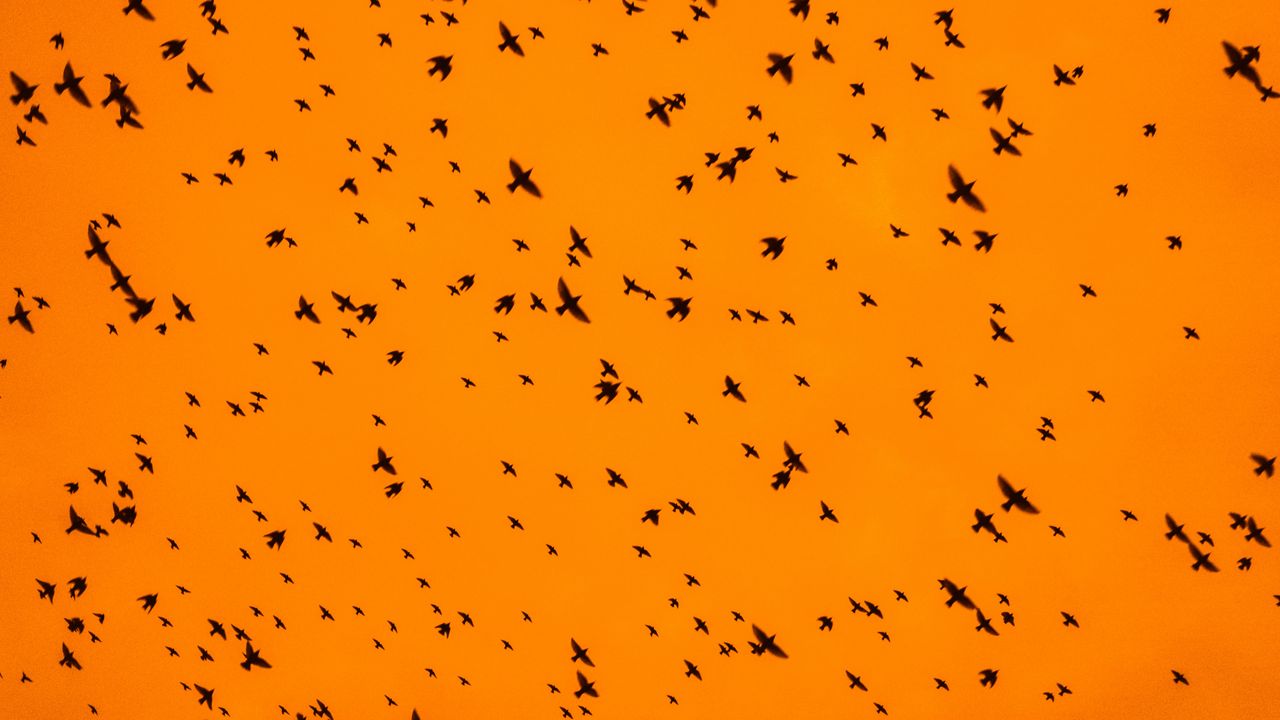
A thunder of synchronized wings rolled across the compound like distant artillery, followers pouring into the courtyards, faces upturned, confusion blooming into fear as the sky fills with descending silhouettes like angels—but wrong.
“Call them off.”
“I thought you might want to see what unstable looks like,” Joseph says, glass shattering in an explosion of feathers and steal as the winged beings descend, screams ripping across the courtyard as figures tore through stone and flesh alive. Metallic screeches split the air, no discrimination between inner circle and devotee as the flight descends as a single organism, ripping through infrastructure, shredding banners, and overturning all in their paths.
“This will destroy everything,” Wynn says, grabbing Joseph’s arm. Where she is urgent, Joseph is calm.
“You already did.”
The ceiling gives way and the handlers scatter. One doesn’t make it three steps before their blood paints the obsidian table while another is tackled through the window with a crash, Joseph still in the midst of the chaos—not screaming, not smiling, but watching the empire collapse under the weight of its own duplicity.
It is Wynn who falls last, Joseph stepping forward through drifting feathers and broken glass, stopping amid the wreckage as the flight settled in the ruins, gorging on what remained.
And he’s, again, alone.
It doesn’t begin with shouting, but containment, Joseph escorted—not dragged and not struck—into the council chamber at the center of the compound, red rock horizon glowing beyond the walls, desert stripped bare under late-afternoon light, and Wynn, posted at the head of the long obsidian table. She’s not deferential, not hostile, but resolved as the inner circle forms a crescent around Joseph. They’re the very same men and woman who had stood by his side during speeches, which stitched his back after removals, who filtered money and movement into something seamless.
“We need to discuss stability,” Wynn states, the word landing like a diagnosis. Joseph’s gaze flicks around the room, reading posture the way other men read spreadsheets.
“You know what I’m talking about,” she continues. “You felt it—your emotional spikes are triggering external responses. We can’t risk instability, Joseph. Not at this scale.”
“You mean you can’t risk losing control.”
Silence, but there is no denial.
“We built this together, but it has grown beyond singular oversight. You need rest and distance, and we can manage operations.”
Absence.
“You want to sideline me,” Joseph says, almost laughing.
“We want to preserve the mission.”
The mission.
Joseph looks around the room again—these are the people who whispered strategy while he bled, who framed his grief into doctrine, who monetized transcendence, who told him cutting his wings was purification and then sold the footage in subtle, curated drops to deepen myth; and now they’re afraid—not of him, but of losing their access to him.
“You built a contingency.”
Wynn doesn’t answer, which is enough for him and as the doors lock behind him, containing him, Joseph feel something come clean—not grief, not guilt, but clarity.
“You were never stewards,” he says. “You were shepherds.”
“Joseph, don’t escalate this.”
Outside, the air shifts, starting as a pressure drop as the desert wind flattens against the glass walls.
“Don’t.” Wynn says, eyes flicking upward instinctively. Joseph doesn’t raise his voice in response, doesn’t spread wings that aren’t there, but simply exhales and lets the anger he has swallowed for years finally surface—not as wild fury, but verdict.
“You compromised the sanctuary,” he says, a faint tremor passing through the building. High above, a seam of black forms against the sky, shadows crossing the sun to block the path of rays into the building.
“You were supposed to protect what was build and instead you tried to manage me,” Joseph says, voice almost conversational.
“He’s calling them,” says another handler, the glass ceiling darkening. Wynn moves with urgency.
“Joseph, think about the followers,” she says. “They don’t know anything about this.”
“They followed you.”
A thunder of synchronized wings rolled across the compound like distant artillery, followers pouring into the courtyards, faces upturned, confusion blooming into fear as the sky fills with descending silhouettes like angels—but wrong.
“Call them off.”
“I thought you might want to see what unstable looks like,” Joseph says, glass shattering in an explosion of feathers and steal as the winged beings descend, screams ripping across the courtyard as figures tore through stone and flesh alive. Metallic screeches split the air, no discrimination between inner circle and devotee as the flight descends as a single organism, ripping through infrastructure, shredding banners, and overturning all in their paths.
“This will destroy everything,” Wynn says, grabbing Joseph’s arm. Where she is urgent, Joseph is calm.
“You already did.”
The ceiling gives way and the handlers scatter. One doesn’t make it three steps before their blood paints the obsidian table while another is tackled through the window with a crash, Joseph still in the midst of the chaos—not screaming, not smiling, but watching the empire collapse under the weight of its own duplicity.
It is Wynn who falls last, Joseph stepping forward through drifting feathers and broken glass, stopping amid the wreckage as the flight settled in the ruins, gorging on what remained.
And he’s, again, alone.
revelation 19:17
"Then I saw an angel standing in the sun, and he cried out in a loud voice to all the birds flying overhead..."
It begins in the pupils, dilated and far too wide for morning. Joseph notices it before the tremor in Matches’ hand, before the faint lag in his responses, before the way desert light seems to press too brightly against the glass. His coffee cup rests untouched on the stone ledge, Joseph watching Matches instead like he might tilt off of the world.
“Hey,” Joseph says, stepping closer—immediately, but not fast enough to startle in an attempt to keep everything, every movement and every breath, controlled. The courtyard continues as it naturally does, humming with the usual life of followers drifting between buildings, prayer flags tugging at their lines, but Joseph can feel something else—a shift—and he lifted a hand not to seize, but steady, fingers warm against the back of Matches’ neck.
“Look at me,” he says gently, but it doesn’t stop his gaze from snapping too sharp, too vulnerable.
“It’s fine,” Matches whispers, but Joseph can tell his pulse is racing—can see it in his throat and feels it underneath the palm of his hand, resting gently, but deliberately close to his jugular.
“There’s something in the coffee.” He doesn’t know for certain, but given the cup, Matches’ sipped at, and Joseph’s left untouched, he makes the assumption easily enough as Matches’ jaw tightens. He slides his hand down his arm to his hand, lacing his fingers together.
“Stay with me.”
Joseph guides him to sit on the low bench near the reflecting pool, the water’s surface shimmering perhaps too bright and too alive, the ripples resembling wings—wings that are everywhere and nowhere all at once, behind Joseph, in the water, and unfurling from the sky; but Joseph doesn’t look, focusing on something else rising.
Far beyond the compound walls, beyond the manicured stillness, beyond the red rock horizon, there is a stirring, an echo of anger, cold and sharp, built of steel and for violence and obedience. They’re sensitive to him, his emotional pitch, and something in him is beginning to fracture no matter the calm he exhibits.
Someone touched what was his.
Someone compromised the sanctity of his space.
It is a dark and dangerous thought that coils while high above the desert thermals, specks begin to form—distant, circling shapes catching updrafts as Joseph forces his breathing to slow and the ire from rising up.
Not now.
“You’re safe, Matches,” he says, thumb brushing slow circles into his knuckles, grounding and rhythmic, Matches’ eyes glistening—not from emotion, at least not that Joseph can tell, but sensory overload. His free hand comes up, cupping the side of his face like a steady anchor.
“Listen to my voice,” he said, the wind beginning to rise as, across the courtyard, a few followers glance upward, surely not the only ones who have noticed a shift in pressure as Wynn steps out onto a balcony, scanning the horizon with a tightening jaw. Joseph breathes, closing his eyes, lowing his forehead to Matches’ to rest it there.
“Breathe with me,” he says quietly. “In.”
Inhale.
“Out.”
Exhale.
“You’re not losing control,” he continues, perhaps speaking to himself just as well as he is Matches. “Your mind is trying to process too much at once and it will pass.”
Now he isn’t sure it is Matches’ pulse he is feeling so much as his own while fingers dig into his shirt to ground Matches in fabric and heat and a very real steadiness that doesn’t pulse or ripple or beat against the winds.
And all Joseph can do is swallow the anger like broken glass—not for the compound, not for optics, but for this, a man trembling in his hands.
“You trust me?”
He nods and Joseph exhales, shifting slightly, drawing Matches against his chest, one arm wrapping firm around his shoulders in protective containment, chin resting briefly against the crown of his head. From a distance, it almost looks tender, but up close, Joseph’s jaw is clenched hard enough to ache.
“Then stay right here.”
He doesn’t listen—pretends not to—when Wynn says, “they’re responding to you.”
He doesn’t look up when other followers turn their attentions to the sky where a circle of winged beings starts to widen the space, the pressure in the air easing incrementally. They’re waiting—but they’re not descending as once-boiling blood simmers, focuses on what is the most pressing, Joseph pressing a soft kiss to Matches’ temple—gentle enough to pass as reassurance and fierce enough to stake claim.
“I’ve got you.”
And for now, the sky listens.
It begins in the pupils, dilated and far too wide for morning. Joseph notices it before the tremor in Matches’ hand, before the faint lag in his responses, before the way desert light seems to press too brightly against the glass. His coffee cup rests untouched on the stone ledge, Joseph watching Matches instead like he might tilt off of the world.
“Hey,” Joseph says, stepping closer—immediately, but not fast enough to startle in an attempt to keep everything, every movement and every breath, controlled. The courtyard continues as it naturally does, humming with the usual life of followers drifting between buildings, prayer flags tugging at their lines, but Joseph can feel something else—a shift—and he lifted a hand not to seize, but steady, fingers warm against the back of Matches’ neck.
“Look at me,” he says gently, but it doesn’t stop his gaze from snapping too sharp, too vulnerable.
“It’s fine,” Matches whispers, but Joseph can tell his pulse is racing—can see it in his throat and feels it underneath the palm of his hand, resting gently, but deliberately close to his jugular.
“There’s something in the coffee.” He doesn’t know for certain, but given the cup, Matches’ sipped at, and Joseph’s left untouched, he makes the assumption easily enough as Matches’ jaw tightens. He slides his hand down his arm to his hand, lacing his fingers together.
“Stay with me.”
Joseph guides him to sit on the low bench near the reflecting pool, the water’s surface shimmering perhaps too bright and too alive, the ripples resembling wings—wings that are everywhere and nowhere all at once, behind Joseph, in the water, and unfurling from the sky; but Joseph doesn’t look, focusing on something else rising.
Far beyond the compound walls, beyond the manicured stillness, beyond the red rock horizon, there is a stirring, an echo of anger, cold and sharp, built of steel and for violence and obedience. They’re sensitive to him, his emotional pitch, and something in him is beginning to fracture no matter the calm he exhibits.
Someone touched what was his.
Someone compromised the sanctity of his space.
It is a dark and dangerous thought that coils while high above the desert thermals, specks begin to form—distant, circling shapes catching updrafts as Joseph forces his breathing to slow and the ire from rising up.
Not now.
“You’re safe, Matches,” he says, thumb brushing slow circles into his knuckles, grounding and rhythmic, Matches’ eyes glistening—not from emotion, at least not that Joseph can tell, but sensory overload. His free hand comes up, cupping the side of his face like a steady anchor.
“Listen to my voice,” he said, the wind beginning to rise as, across the courtyard, a few followers glance upward, surely not the only ones who have noticed a shift in pressure as Wynn steps out onto a balcony, scanning the horizon with a tightening jaw. Joseph breathes, closing his eyes, lowing his forehead to Matches’ to rest it there.
“Breathe with me,” he says quietly. “In.”
Inhale.
“Out.”
Exhale.
“You’re not losing control,” he continues, perhaps speaking to himself just as well as he is Matches. “Your mind is trying to process too much at once and it will pass.”
Now he isn’t sure it is Matches’ pulse he is feeling so much as his own while fingers dig into his shirt to ground Matches in fabric and heat and a very real steadiness that doesn’t pulse or ripple or beat against the winds.
And all Joseph can do is swallow the anger like broken glass—not for the compound, not for optics, but for this, a man trembling in his hands.
“You trust me?”
He nods and Joseph exhales, shifting slightly, drawing Matches against his chest, one arm wrapping firm around his shoulders in protective containment, chin resting briefly against the crown of his head. From a distance, it almost looks tender, but up close, Joseph’s jaw is clenched hard enough to ache.
“Then stay right here.”
He doesn’t listen—pretends not to—when Wynn says, “they’re responding to you.”
He doesn’t look up when other followers turn their attentions to the sky where a circle of winged beings starts to widen the space, the pressure in the air easing incrementally. They’re waiting—but they’re not descending as once-boiling blood simmers, focuses on what is the most pressing, Joseph pressing a soft kiss to Matches’ temple—gentle enough to pass as reassurance and fierce enough to stake claim.
“I’ve got you.”
And for now, the sky listens.
i'm coming home
He almost turns the jet around twice before the wheels touch the runway after dusk, the skyline of New York City rising in the distance like something he once belonged to, but never fit into—steel and glass, ordered, predictable, nothing like the open, devouring vastness of Sedona’s rest horizon.
It still takes a long time for him to step out of the plane once the cabin doors are open, Michael’s words echoing in his head over and over, and not for the first time.
He’s starting to mourn the idea of you.
And that hit deeper than any accusation ever could, chewing still as he enters his father’s townhouse which feels smaller than he remembers, but Joseph knows he is larger now—expanded by myth, by wings, by the quiet worship of hundreds of people who looked at him like something ascended who now couldn’t have been further away.
The doorman freezes when he steps inside, recognition flickering and quickly followed by disbelief.
“Mr. Warren—”
“Please,” he says, shaking his head. “No announcement.”
As he approaches the door, he can already tell by the light peeking through that his father’s office light is still on—of course—and Joseph pauses outside of the door, hovering hand over the wood. For a moment, he remembers himself at seventeen, knocking on it with a half-formed argument about ethics or inheritance or the future of the company. At nineteen, standing in the same hallway, he can’t remember how to occupy his own body. Even now, he isn’t quite sure what he should be doing—whether he should knock or turn around and walk away.
He knocks.
“Come in.”
Joseph Warren II, seated behind his desk not unlike years before, looks up from a spread of papers as he steps in—and freezes.
The silence that follows is not dramatic—
It’s devastating.
Joseph had prepared for anger, for condemnation, for a speech about optics and liability and damage control, but instead, he sees a man who has not been sleeping well, a man who looks older than he should, and a man who, for a split second, looks like he might collapse under relief alone.
“Joey.” His father doesn’t say his name so much as he breathes it—not “III” or “son”, but his name.
Joseph doesn’t trust his voice yet to say anything, but steps forward instead, stopping just inside the room like a visitor unsure of his welcome.
“You cut them again,” his father points out.
“They grow back.”
“I know.”
Another silence, this time one that stretches in unfamiliarity.
“I thought you’d be angry,” Joseph finally says, the practiced cadence used in front of followers deserting him completely, and his father lets out a brittle huff of air, something akin to a laugh.
“I’ve been many things,” he admits, “but angry was never the loudest.”
“I wasn’t the same.”
“No,” he agrees softly, no denial or false comfort, but shared truth—perhaps for the first time. “You weren’t.”
“I don’t remember parts of it,” Joseph says, composure cracking a fraction. “The impact, the noise—I remember her hand and then I remember waking up, and I kept thinking it was a mistake, that I’d been miscounted.”
His father closes his eyes.
“I kept thinking ‘I should have been there’. I was supposed to be there.”
And then they just look at each other, orbiting the same guilt from opposite directions.
“I thought if I punished myself, if I gave something back, if I cut away what shouldn’t have survived—”
“Joseph—” His father’s voice breaks the spiral. “She tried to shield you. The investigators told me. In the final seconds, she leaned over you. Do you think she did that so you could spend the rest of your life carving yourself apart?”
Joseph’s eyes burn, but he doesn’t look away as he says, “I don’t know how to live without her.”
“I don’t either.”
His father stands slowly, stepping around the desk with uncertainty if his son will accept proximity, but more than anything, it simply undoes him in recognition of their shared, but different grieving, no longer aligning himself to carry the narrative of transformation alone.
“You disappeared and I told myself you were building something, that you were strong enough.”
“I was surviving,” Joseph replies. “I didn’t think you wanted what was left.”
His father’s face folds in on itself.
“You were always enough.”
The embrace is awkward at first—two men unused to this kind of contact, but as Joseph’s breath shatters, a son who did not die who doesn’t know what to do with that knowledge, it tightens. Joseph’s eyes shut and for the first time in years, he allows himself to be held without needing to be the one holding everything together; and somewhere, beneath scar tissue and doctrine and penance, something begins, quietly, to loosen.
He almost turns the jet around twice before the wheels touch the runway after dusk, the skyline of New York City rising in the distance like something he once belonged to, but never fit into—steel and glass, ordered, predictable, nothing like the open, devouring vastness of Sedona’s rest horizon.
It still takes a long time for him to step out of the plane once the cabin doors are open, Michael’s words echoing in his head over and over, and not for the first time.
He’s starting to mourn the idea of you.
And that hit deeper than any accusation ever could, chewing still as he enters his father’s townhouse which feels smaller than he remembers, but Joseph knows he is larger now—expanded by myth, by wings, by the quiet worship of hundreds of people who looked at him like something ascended who now couldn’t have been further away.
The doorman freezes when he steps inside, recognition flickering and quickly followed by disbelief.
“Mr. Warren—”
“Please,” he says, shaking his head. “No announcement.”
As he approaches the door, he can already tell by the light peeking through that his father’s office light is still on—of course—and Joseph pauses outside of the door, hovering hand over the wood. For a moment, he remembers himself at seventeen, knocking on it with a half-formed argument about ethics or inheritance or the future of the company. At nineteen, standing in the same hallway, he can’t remember how to occupy his own body. Even now, he isn’t quite sure what he should be doing—whether he should knock or turn around and walk away.
He knocks.
“Come in.”
Joseph Warren II, seated behind his desk not unlike years before, looks up from a spread of papers as he steps in—and freezes.
The silence that follows is not dramatic—
It’s devastating.
Joseph had prepared for anger, for condemnation, for a speech about optics and liability and damage control, but instead, he sees a man who has not been sleeping well, a man who looks older than he should, and a man who, for a split second, looks like he might collapse under relief alone.
“Joey.” His father doesn’t say his name so much as he breathes it—not “III” or “son”, but his name.
Joseph doesn’t trust his voice yet to say anything, but steps forward instead, stopping just inside the room like a visitor unsure of his welcome.
“You cut them again,” his father points out.
“They grow back.”
“I know.”
Another silence, this time one that stretches in unfamiliarity.
“I thought you’d be angry,” Joseph finally says, the practiced cadence used in front of followers deserting him completely, and his father lets out a brittle huff of air, something akin to a laugh.
“I’ve been many things,” he admits, “but angry was never the loudest.”
“I wasn’t the same.”
“No,” he agrees softly, no denial or false comfort, but shared truth—perhaps for the first time. “You weren’t.”
“I don’t remember parts of it,” Joseph says, composure cracking a fraction. “The impact, the noise—I remember her hand and then I remember waking up, and I kept thinking it was a mistake, that I’d been miscounted.”
His father closes his eyes.
“I kept thinking ‘I should have been there’. I was supposed to be there.”
And then they just look at each other, orbiting the same guilt from opposite directions.
“I thought if I punished myself, if I gave something back, if I cut away what shouldn’t have survived—”
“Joseph—” His father’s voice breaks the spiral. “She tried to shield you. The investigators told me. In the final seconds, she leaned over you. Do you think she did that so you could spend the rest of your life carving yourself apart?”
Joseph’s eyes burn, but he doesn’t look away as he says, “I don’t know how to live without her.”
“I don’t either.”
His father stands slowly, stepping around the desk with uncertainty if his son will accept proximity, but more than anything, it simply undoes him in recognition of their shared, but different grieving, no longer aligning himself to carry the narrative of transformation alone.
“You disappeared and I told myself you were building something, that you were strong enough.”
“I was surviving,” Joseph replies. “I didn’t think you wanted what was left.”
His father’s face folds in on itself.
“You were always enough.”
The embrace is awkward at first—two men unused to this kind of contact, but as Joseph’s breath shatters, a son who did not die who doesn’t know what to do with that knowledge, it tightens. Joseph’s eyes shut and for the first time in years, he allows himself to be held without needing to be the one holding everything together; and somewhere, beneath scar tissue and doctrine and penance, something begins, quietly, to loosen.
playlist
the contract - twenty one pilots
the chain - fleetwood mac
mantra - bring me the horizon
take me to church - hozier
kool-aid - bring me the horizon
change (in the house of flies) - deftones
heaven help us - my chemical romance
the contract - twenty one pilots
the chain - fleetwood mac
mantra - bring me the horizon
take me to church - hozier
kool-aid - bring me the horizon
change (in the house of flies) - deftones
heaven help us - my chemical romance
the ex-con → gabriel “gabe” reyes
He used to measure mornings by headcounts and the metallic scream of doors, but now he measures them by sunlight on stone and the way Joseph moves through it like he belongs to something bigger than walls. When he seems Matches sitting to close—knee brushing Joseph’s, smoke curling lazily between them—he doesn’t see danger. He sees normalcy. Two mean leaning in, speaking low, with no one posturing—peace looks like that to him, quiet intimacy without thread. When Joseph laughs, small and unguarded, and Matches answers without lowing his eyes, the ex-con feels something unclench in his chest. Maybe power doesn’t always have to crush. Maybe—just maybe—sometimes it just sits beside you and shares the morning.
the girl who maps scars → elena whitcomb
She watches the way Joseph shifts when the wind lifts his shirt just enough to expose the ridges along his back. She has memorized them—the symmetry the jagged crescents, the faint silver laddering where regrowth once strained against sutures—and when Matches reaches out without thinking and lets his fingers hover near those scars, never flinching and never worshipping, her breath catches. She studies that more than the wounds: The lack of fear and the way Joseph doesn’t tense. The way he allows it. In her notebook later, she redraws the lines from memory, but this time, she sketches a second shape beside them: A hand, resting, steady and unafraid.
the weeping man → thomas hale
He is already fragile when the word “wings” drifts through the courtyard, already close to tears at the thought of Joseph’s sacrifice and transcendence, but when he sees Joseph standing before Matches, back bare, feathers just beginning to edge outward in restless brightness—when he sees Matches step closer instead of back—he breaks. It isn’t because of the wings, but because of the tenderness. Joseph lowers his voice. Matches nods like this is simply something to be held and not feared, and the man weeps harder, shoulders shaking. He believes he is witnessing holiness—not in the violence of wings, but the miracle that someone can look at them and stay.
the squirrel → calder voss
He watches from the shadows, always calculating exits. He sees too much—the way Joseph’s gaze softens around Matches, the way Matches doesn’t bow like the others, and it unsettles him. Power should demand distance, but these two stand shoulder-to-shoulder like conspirators. The squirrely man notes the proximity—the coded looks and the way Joseph dismisses others faster when Matches is near. He tells himself it is weakness, a fracture that can be exploited, but when Joseph leans in and murmurs something that makes Matches’ mouth twitch in a half-smile, Joseph’s expression turning into something dangerously human, the man feels something colder than suspicion. He realizes this isn’t leverage. It’s gravity and gravity pulls everything down eventually.
the handler → wynn armitage
Wynn doesn’t watch for romance so much as she watches for weakness. Form the upper balcony, half-shadowed behind tinted glass, she studies Joseph near the reflecting pool and Matches much too close—within arm’s reach, posture loose, but deliberate, not deferential. Never deferential. Wynn notices what others romanticize: Joseph’s body angled towards Matches, the softness there that Joseph doesn’t permit elsewhere, vulnerability and when Joseph’s hand finds Matches’ wrist, Wynn’s jaw tightens. It isn’t because of the touch, but because of how natural it looks and the fact that Joseph doesn’t seem to be aware that is he doing it.
She has seen him command rooms, orchestrate narratives, sever emotional ties with surgical detachment when necessary. She has seen him bleed without flinching and cut his own wings free with stoic ritual, but she has never seen him look uncertain—until now. Matches says something—too low to hear from a distance—and Joseph’s mouth curves into a faint smile. It isn’t the public one, cultivated benevolence, but a private one and Wynn feels it then—not jealousy or outrage, but risk, knowing that if Joseph prioritizes one person over the architecture of the movement, the entire structure destabilizes. Wynn folds her hand behind her back, telling herself this is temporary, that Joseph is testing boundaries, but when Matches lifts his chin and meets Joseph’s eyes, and Joseph doesn’t assert dominance or reclaim hierarchy, Wynn understands something far more dangerous.
This is not indulgence, this is attachment.
the childhood friend → cameron kessler
He remembers him before the crash, before the wings, before the silence sharpened him into something luminous and unreachable, sitting in study hall in sunlit rooms, engaging in half-finished arguments about business ethics, and the easy closeness of boys who didn’t yet understand how uneven the world would make them. He remembers wanting him then—quietly, privately—long before he had words for that wanting. He tell himself he joined the compound out of loyalty and concern, but when he watches Joseph stand too close to Matches—when he sees that private half-smile and the unguarded lean of a body he hasn’t been granted in years—something corrosive stirs low in his chest.
It should have been him. He was there first, friends before he was a myth, before there were followers, before the wings carved divinity into his silhouette. He knew the boy who laughed too loud and rolled his eyes at corporate functions, and the softness no one else remembers or was privy to; and Matches doesn’t. Matches knows the spectacle, and yet Joseph looks at him like he is something rare.
Cameron feels it like he feels theft—not of power, but of access, and tells himself that Matches is manipulating him, that Joseph is vulnerable after everything to do with the crash, with his mother, with the endless cycle of removal and regrowth, and he is sure he is the only one who understands what Joseph has lost, but beneath that rationalization lies something uglier: Jealousy has teeth. As he watches the two of them framed by desert light, he feels the old ache curdle into something sharper. If he can’t be the one Joseph leans toward, perhaps he will be the one who reminds him who he used to belong to.
He used to measure mornings by headcounts and the metallic scream of doors, but now he measures them by sunlight on stone and the way Joseph moves through it like he belongs to something bigger than walls. When he seems Matches sitting to close—knee brushing Joseph’s, smoke curling lazily between them—he doesn’t see danger. He sees normalcy. Two mean leaning in, speaking low, with no one posturing—peace looks like that to him, quiet intimacy without thread. When Joseph laughs, small and unguarded, and Matches answers without lowing his eyes, the ex-con feels something unclench in his chest. Maybe power doesn’t always have to crush. Maybe—just maybe—sometimes it just sits beside you and shares the morning.
the girl who maps scars → elena whitcomb
She watches the way Joseph shifts when the wind lifts his shirt just enough to expose the ridges along his back. She has memorized them—the symmetry the jagged crescents, the faint silver laddering where regrowth once strained against sutures—and when Matches reaches out without thinking and lets his fingers hover near those scars, never flinching and never worshipping, her breath catches. She studies that more than the wounds: The lack of fear and the way Joseph doesn’t tense. The way he allows it. In her notebook later, she redraws the lines from memory, but this time, she sketches a second shape beside them: A hand, resting, steady and unafraid.
the weeping man → thomas hale
He is already fragile when the word “wings” drifts through the courtyard, already close to tears at the thought of Joseph’s sacrifice and transcendence, but when he sees Joseph standing before Matches, back bare, feathers just beginning to edge outward in restless brightness—when he sees Matches step closer instead of back—he breaks. It isn’t because of the wings, but because of the tenderness. Joseph lowers his voice. Matches nods like this is simply something to be held and not feared, and the man weeps harder, shoulders shaking. He believes he is witnessing holiness—not in the violence of wings, but the miracle that someone can look at them and stay.
the squirrel → calder voss
He watches from the shadows, always calculating exits. He sees too much—the way Joseph’s gaze softens around Matches, the way Matches doesn’t bow like the others, and it unsettles him. Power should demand distance, but these two stand shoulder-to-shoulder like conspirators. The squirrely man notes the proximity—the coded looks and the way Joseph dismisses others faster when Matches is near. He tells himself it is weakness, a fracture that can be exploited, but when Joseph leans in and murmurs something that makes Matches’ mouth twitch in a half-smile, Joseph’s expression turning into something dangerously human, the man feels something colder than suspicion. He realizes this isn’t leverage. It’s gravity and gravity pulls everything down eventually.
the handler → wynn armitage
Wynn doesn’t watch for romance so much as she watches for weakness. Form the upper balcony, half-shadowed behind tinted glass, she studies Joseph near the reflecting pool and Matches much too close—within arm’s reach, posture loose, but deliberate, not deferential. Never deferential. Wynn notices what others romanticize: Joseph’s body angled towards Matches, the softness there that Joseph doesn’t permit elsewhere, vulnerability and when Joseph’s hand finds Matches’ wrist, Wynn’s jaw tightens. It isn’t because of the touch, but because of how natural it looks and the fact that Joseph doesn’t seem to be aware that is he doing it.
She has seen him command rooms, orchestrate narratives, sever emotional ties with surgical detachment when necessary. She has seen him bleed without flinching and cut his own wings free with stoic ritual, but she has never seen him look uncertain—until now. Matches says something—too low to hear from a distance—and Joseph’s mouth curves into a faint smile. It isn’t the public one, cultivated benevolence, but a private one and Wynn feels it then—not jealousy or outrage, but risk, knowing that if Joseph prioritizes one person over the architecture of the movement, the entire structure destabilizes. Wynn folds her hand behind her back, telling herself this is temporary, that Joseph is testing boundaries, but when Matches lifts his chin and meets Joseph’s eyes, and Joseph doesn’t assert dominance or reclaim hierarchy, Wynn understands something far more dangerous.
This is not indulgence, this is attachment.
the childhood friend → cameron kessler
He remembers him before the crash, before the wings, before the silence sharpened him into something luminous and unreachable, sitting in study hall in sunlit rooms, engaging in half-finished arguments about business ethics, and the easy closeness of boys who didn’t yet understand how uneven the world would make them. He remembers wanting him then—quietly, privately—long before he had words for that wanting. He tell himself he joined the compound out of loyalty and concern, but when he watches Joseph stand too close to Matches—when he sees that private half-smile and the unguarded lean of a body he hasn’t been granted in years—something corrosive stirs low in his chest.
It should have been him. He was there first, friends before he was a myth, before there were followers, before the wings carved divinity into his silhouette. He knew the boy who laughed too loud and rolled his eyes at corporate functions, and the softness no one else remembers or was privy to; and Matches doesn’t. Matches knows the spectacle, and yet Joseph looks at him like he is something rare.
Cameron feels it like he feels theft—not of power, but of access, and tells himself that Matches is manipulating him, that Joseph is vulnerable after everything to do with the crash, with his mother, with the endless cycle of removal and regrowth, and he is sure he is the only one who understands what Joseph has lost, but beneath that rationalization lies something uglier: Jealousy has teeth. As he watches the two of them framed by desert light, he feels the old ache curdle into something sharper. If he can’t be the one Joseph leans toward, perhaps he will be the one who reminds him who he used to belong to.
something yet unnamed
Evening presses low against the mesa, the dessert gone copper, heat still rising in soft distortions from the stones beneath their feet. The compound hum is distance now—followers gathered for vespers, prayer flags snapping faintly in the wind—and Joseph stands near the edge of the terrace, back to the open expanse. The last light cuts across him in sharp planes of gold, catching in his hair, carving the angles of his face. The linen shift he’d worn earlier hung open at the throat, sleeves pushed back, exposing ink that climbs symmetrical along his forearms.
Matches steps into that light like he is testing something, not bowing and not averting his gaze, leaning against the low stone wall instead, one ankle crossing over the other, cigarette unlit between his fingers as if forgotten.
“You ever get tired of them looking at you like that?” He asks, voice low, distinctly Jersey softened by the hour. Below them, a handful of followers glance up with reverence, always watching, and Joseph’s mouth curves faintly.
“You’re looking at me,” he replies.
“That’s different.”
“How?” Joseph asks, turning then, closing the distance without appearing to. Matches shrugs.
“I’m not askin’ you to be anything.”
Joseph steps closer until the space in narrowed to breath and warmth and subtle shifts in the wind, the desert behind him making a halo of light around his silhouette. From a distance, it would look almost mythic, but up close, it is human.
“You think the others are?”
“I think they need you to be.”
Joseph studies him then searching, measuring, something flickering beneath composure. There’s no worship in his expression, no fear, just steady assessment and something else. Joseph lifts a hand—not to command or gesture—to rest it lightly at the back of the stone wall near Matches’ should, caging him in without touching him.
“You don’t need me?”
There’s a beat, Matches’ jaw tightening.
“I didn’t say that.”
The cigarette slips from his fingers, forgotten, and Joseph’s gaze drops to the curve of Matches’ mouth, the tension in his throat, and then rises again.
“You’re not like the rest.”
“Good,” Matches says, the word quiet—almost defiant—and neither of them move, suspended there, two forces standing at the edge of something neither has named yet.
And for once, Joseph doesn’t look at the horizon beyond.
He looks only at him.
Evening presses low against the mesa, the dessert gone copper, heat still rising in soft distortions from the stones beneath their feet. The compound hum is distance now—followers gathered for vespers, prayer flags snapping faintly in the wind—and Joseph stands near the edge of the terrace, back to the open expanse. The last light cuts across him in sharp planes of gold, catching in his hair, carving the angles of his face. The linen shift he’d worn earlier hung open at the throat, sleeves pushed back, exposing ink that climbs symmetrical along his forearms.
Matches steps into that light like he is testing something, not bowing and not averting his gaze, leaning against the low stone wall instead, one ankle crossing over the other, cigarette unlit between his fingers as if forgotten.
“You ever get tired of them looking at you like that?” He asks, voice low, distinctly Jersey softened by the hour. Below them, a handful of followers glance up with reverence, always watching, and Joseph’s mouth curves faintly.
“You’re looking at me,” he replies.
“That’s different.”
“How?” Joseph asks, turning then, closing the distance without appearing to. Matches shrugs.
“I’m not askin’ you to be anything.”
Joseph steps closer until the space in narrowed to breath and warmth and subtle shifts in the wind, the desert behind him making a halo of light around his silhouette. From a distance, it would look almost mythic, but up close, it is human.
“You think the others are?”
“I think they need you to be.”
Joseph studies him then searching, measuring, something flickering beneath composure. There’s no worship in his expression, no fear, just steady assessment and something else. Joseph lifts a hand—not to command or gesture—to rest it lightly at the back of the stone wall near Matches’ should, caging him in without touching him.
“You don’t need me?”
There’s a beat, Matches’ jaw tightening.
“I didn’t say that.”
The cigarette slips from his fingers, forgotten, and Joseph’s gaze drops to the curve of Matches’ mouth, the tension in his throat, and then rises again.
“You’re not like the rest.”
“Good,” Matches says, the word quiet—almost defiant—and neither of them move, suspended there, two forces standing at the edge of something neither has named yet.
And for once, Joseph doesn’t look at the horizon beyond.
He looks only at him.